Saturday, 23 February 2013

Google Glass tech offers vision of the future


The wearable internet-connected gadget, not expected to hit the market until 2014, will retail for under $1,500.


A new promo video for its internet-connected glasses technology known as Google Glass has given potential early adopters a chance to buy the as yet unreleased product.

The video, posted on Wednesday, touted the wearable technology as one of the biggest advancements in personal computing in many years.

In the video, people wore the glasses while skydiving, riding a rollercoaster, skiing, and swinging on a trapeze, but Tom Royal, editor of the London-based magazine Popular Science UK, cautioned that the product will require a great deal of investment and infrastructure.

"It's going to require a huge investment around the world to make these things work" anytime and anywhere as the video purports, Royal told Al Jazeera.

Though he says the glasses come in "a clever looking, quite attractive package", Royal, like other analysts, said consumers should temper their expectations.

"The danger of hyping something this much is that clearly the technology is far behind where the hype is right now," Rocky Agrawal of reDesign Mobile, said, adding, "there's a real danger of setting the expectations bar too high".

The glasses will handle most of the same tasks as smartphones, but respond to voice commands instead of fingers touching a screen.

The glasses include a tiny display screen attached to a rim above the right eye and run on Google's Android operating system for mobile devices.

Google has said the mass-market version of Google Glass will cost less than $1,500 - the price paid by an exclusive number of computer programmers last June - but more than a smart phone.

The California-based company does not plan to start selling "Google Glass" in the mass market until 2014.

PS4: 10 things you need to know about Sony’s new console


PS4 is finally here. Sony delivered its next-generation console plans to the world Wednesday, debuting the PlayStation 4 during an event in New York City.


Broadcast worldwide, with an admittedly shaky feed, Sony spoke about its new hardware, new games and new plans for the future. The event ultimately lasted about two hours, and there remains much to dissect.

So let’s run through the biggest announcements, and absences, from Sony’s major conference.

Release date: At the very end of the event, Sony revealed a vague launch window for the console — “Holiday 2013.” Whether that means October or December remains to be seen, but at least there’s confirmation that the PS4 will launch this year.

Controllers: Remarkably similar to the leaked prototypes reported on by The Times last week, the new Dualshock 4 controllers have a touchscreen in the center, a share button and feature color-coded sensory bars, which will interact with a light bar to determine depth, location and more.

Social as a priority: There were rumors that Sony would pursue a significant social infrastructure in the PS4, and they were right. It appears to have been built from the ground up with social in mind, integrating real-world identification, Facebook and dynamic real-time sharing. Players will be able to not just quickly cut clips of recent gameplay footage, but stream live game sessions to friends, thanks to Sony’s dealings with Ustream.

PHOTOS: A look back on the PlayStation

Blizzard!: It’s been forever since Blizzard, the company that has dominated PCs with “World of Warcraft,” “Starcraft” and “Diablo,” has released a game for consoles. But that’s all changing with the release of “Diablo III,” not just on PS3, but on the PS4 as well. What the game looks like on console hardware, and what the reconfigured interface looks like will be unveiled next month at PAX East.

No backward capability…yet: The PS4 won’t be able to play PS2 or PS3 games, it’s true. But Sony’s stated hope is that eventually, by utilizing the cloud and the PS4′s existing streaming abilities, that emulation of the entire PlayStation line’s library of games will be possible at some point.

Remote play: What’s good for Nintendo is apparently good for Sony. Announcing remote play between the PS4 and PlayStation Vita, Sony leapfrogged one of the competing Wii U’s selling points: the ability to take a full-fledged console game off the television and onto a mobile device. Utilizing Gaikai’s streaming software, the PS4 will act as a server, and the Vita as a client.

The ultimate goal, according to Gaikai Chief Executive David Perry, is to make “every PS4 game playable on the PlayStation Vita.” How PS4 games, which use a controller with more buttons than the Vita has, will work with such a transition remains unknown.

More from the PS3 stalwarts: “Killzone” and “Infamous,” two series that released a couple of titles apiece on the PS3, return for new installments on the PS4. “Killzone Shadow Fall” was displayed with more than seven minutes of real-time gameplay demonstration, looking to maintain the series’ FPS fundamentals. “Infamous: Second Son,” teased a storyline apart from the first two games, featuring what may have been a new protagonist with the same projectile and mobility-based superpowers.

The hardware specs: The PS4 will feature an X86 CPU, enhanced PC GPU, 8GB unified memory, local HD and GDDR 5 system memory. What that means in layman’s terms is that the PS4 will be significantly more powerful than the PS3, but don’t expect the same graphical leap as was experienced between the PS2 and PS3. Given the demos on display during Sony’s debut, it’s likely that all but the most hardcore PC gamers will be impressed by the console’s initial graphical displays.

Online purchasing: Sony promised that downloadable games would be playable the moment they begin downloading, with the game forcing the downloads into the background initially. What wasn’t mentioned in the event was whether Sony would continue its current PlayStation Plus system, which provides basic online gameplay and functions for free while putting a cost premium on additional features, or if it would move toward something like Xbox Live, which puts a paywall on pretty much anything worthwhile.

But where’s the console? And the price?: Two crucial questions remain in the wake of Sony’s PS4 announcement. What does the console actually look like? And how much will it be? Perhaps Sony learned from its PS3 announcement, which featured fans recoiling from its $599 price point, but if Sony can’t bring the price down to something manageable, E3 or another press event will bring more of the same.

Puppy love: Over $53 billion spent on pets in 2012


Puppy love: Over $53 billion spent on pets in 2012


LOS ANGELES (AP) — The U.S. economy may have remained sluggish last year but Americans refused to scrimp on their pets, with animal lovers spending upwards of $53 billion on food, veterinary care, kennels and other services in 2012.

That's up 5% from 2011, when spending first broke the $50 billion barrier, says the American Pet Products Association, a trade group. APPA President and CEO Bob Vetere predicts another 4% gain this year.

At about $34.3 billion, food and vet care represented about two-thirds of total spending, with money spent on supplies and over-the-counter medications rising by more than 7%. Spending on the growing market of alternative vet care, such as acupuncture, totaled about $12.5 billion.

Vetere says spending on services like grooming, boarding, hotels and pet-sitting grew nearly 10 percent during 2012 to almost $4.4 billion.


Lindsey Vonn rips officials over crash


Lindsey Vonn said Friday her rehab from knee surgery is going well and she hopes to be stronger than ever when she tries to defend her Olympic downhill title a year from now in Sochi, Russia.


She also said she hopes future race juries at major championships will be more mindful of athletes' safety than the one that officiated over the women's super-G at the world alpine championships in Schladming, Austria on Feb. 5.

PREVIOUSLY: Vonn hurts knee after bad crash

"I don't think the jury made the right call," Vonn said to journalists on a teleconference, 17 days after she crashed landing a jump in the world championships super-G, tearing the anterior cruciate and medial collateral ligaments in her right knee and fracturing the tibia bone in her right leg.

"The fog came in and delayed the start of the race. We were waiting on the edge of our seats for hours. I had no chance to go back to my bus and relax. When I was at the start, I was ready to go, but I had no idea what the course conditions were. I inspected the course at 8 a.m. and I ran the course at about 3:15.

MORE: What does Vonn injury mean for Sochi Olympics?

"I skied aggressively, but when I was skiing, I couldn't believe the conditions. The snow was too soft. It had broken down. I didn't think it was safe."

Danger lurked for Vonn off a big jump that she took fast and flew farther than the rest of the skiers that day. Her right ski landed in a pile of soft snow.

"My right knee completely stopped," she said. "That's when my knee buckled, and I flipped over the tip.

When she came to a stop, while lying on the snow she actually called her coach, Alex Hoedlmoser, who was one of the race jury members.

"I told Alex, 'They should stop the race. It's not safe to run,' " Vonn said. "Apparently they didn't do that. I just hope in the future they really think hard about what the conditions are like, because athlete safety should come first and foremost."

Vonn, 28, said the surgery, performed Feb. 10 by Bill Sterett of Vail-Summit Orthopaedics, the head physician for the U.S. women's alpine team, went well.

"There was nothing unexpected," she said. "Nothing that will take longer than expected.

"I have no doubt that I will be able to ski as well or better."

She hopes to be on skis in November and fully ready to defend her Olympic title in February.

She also hopes to resume her records chase. She has 59 career World Cup victories, three shy of the all-time women's mark held by Austria's legendary Annemarie Moser-Proell.

PHOTOS: LINDSEY VONN'S CRASH


Even before the injury and surgery, this season had been one of ups and downs for Vonn. She was hospitalized before the season for an intestinal ailment. Although she won races early in the season, she took an unscheduled, month-long break in late December-early January that she said was because of fatigue related to the earlier intestinal issues.

Vonn also revealed in an interview with People magazine done before the season that she had battled depression through the years and treated the condition with antidepressants.

And she has been fending off rumors in recent weeks about a romantic relationship with Tiger Woods.

"I'm only two weeks out of surgery at this point and I'm not going to talk about my personal life," she said Friday.

Whether all of these issues – the wear and tear on her body, the intestinal problem this year, the rehab, the depression – add up to a hurdle that is too large to overcome in 12 months is unknown.

Vonn said that she has dealt with depression with medication, and she was still winning.

Almost every Olympic or world champion skier has scars on his or her knees. That goes with the territory. Comebacks are common.

And her age – she'll be 29 next season – is on the high end for a World Cup winner, but there have been older winners.

Several women races in speed events (downhill and super-G) have won World Cups into their early 30s, particularly the great Austrians Michaela Dorfmeister and Renate Goetschl.

Vonn's idol, Picabo Street, who had the same will to fight back that Vonn has demonstrated, tore up her knee and required reconstructive surgery in December of 1996 – and, 14 months later, won a gold medal in the Olympic super-G in Nagano, Japan.

Vonn has been a fighter her whole career.

Among the young favorites to win a medal in the Torino Winter Olympics in 2006, Vonn, then known as Lindsey Kildow, crashed violently in a training run and suffered painful contusions on her pelvis and back. She was hospitalized overnight but returned to the mountain two days later and finished eighth in the downhill, then raced in three other events. The gutsy performance earned her the U.S. Olympic Spirit Award.

She came into the Vancouver Olympics in 2010 with a painful shin bruise that made just putting on her boot an excruciating experience. But she persevered and won her first event, the downhill, becoming the first American woman to win the Olympic downhill title.

This, however, is the first time she has had major surgery on one of her legs, and that will make her journey to the 2014 Olympics a major story.

"I'm definitely going to be coming back from a major injury," she said. "So it will definitely be a different position. I'll probably feel in some ways like I'm the underdog now. Maybe that will ease some of the pressure."

PHOTOS: LINDSEY VONN


Superhero window washers surprise sick children


They are squeegeeing out the smiles at hospitals nationwide.

From Tampa to Pittsburgh, Chicago to Memphis, comic superheroes are being spotted all over the country -- and they are fighting grime.

On windows, that is.

In their off-hours, Spider-Man, Captain America, and Batman, to name a few, are washing windows at children's hospitals. Their mission? To bring happiness to the youngest of patients.

"We donned the Spider-Man costumes and we rappelled down the side of the buildings," said Harold Connolly, president of Highrise Window Cleaning of Clearwater, Fla. "We knocked on the glass, waved hello – there were a lot of big smiles."

Connolly organized two superhero window-washing sessions at hospitals in Florida so far this year, and he isn't alone. Images of wide-eyed children in awe of their favorite superheroes washing windows have gone viral online, prompting hospitals and window washing companies nationwide to hop on board.

"Some of these poor kids, they don't get a lot of opportunities for anything fun there," Connolly says. "It cheered them up at least for the moment anyway."

Last week in Chicago, Captain America, Batman, and Spider-Man's mission for the day was surprising children into forgetting that they are in hospital beds at Ann & Robert H. Lurie Children's Hospital of Chicago.

Mission: Complete.

Nolan Erickson, 6, has been spending a lot of time in the hospital with his 14-month-old brother Matthew.

Matthew was born with brain cancer and has undergone six surgeries and five rounds of chemotherapy; the family hasn't left his side.

"We have been in the hospital for 11 months out of the 14 that Matthew has been alive," mother Sue Erickson says. "Nolan has spent his last two birthdays here. Smiles come few and far between."

But on one day – for Nolan, Matthew and their 2-year-old sister Sophia, there was a break from all the sadness.

The three superheroes, window washers from Corporate Cleaning Services, were fighting grime as they rappelled down from the 23rd floor. The heroes circled all around the building, waving, giving a thumbs up and creating soap designs as they went.

"The superheroes' lines were hanging right in front of our window," Erickson says. "The kids just sat there waiting for 45 minutes to see which one it was. It was Spider-Man. When you see your kids excited and smiling – as a parent it was more than I could ever ask for."

Three employees of Corporate Cleaning Services prepare to wash windows dressed as Batman, Spider-Man and Captain America at Lurie Children's Hospital in Chicago.

Hundreds of kids, staff and families were mesmerized by the superheroes swinging around the building for hours.

"I have been here a lot of years but I have never seen anything like it — nothing can brighten a day like a superhero," says Kathleen Keenan, hospital spokesperson. "These three men truly became real-life superheroes when they were on that building and their ropes became their webs. It was magical."

Keenan added: "It was like each kid had their own superhero for a moment, it was like there was no glass between them."

The superhuman trend is spreading all over the country:

Le Bonheur Children's Hospital in Memphis, Tenn., has had two visits, one in October from the American National Skyline's superheroes and one in December from elves, says spokesperson Sara Burnett.
The youngsters at Ministry St. Joseph's Children's Hospital in Marshfield, Wis., got a big surprise in December when Spider-Man, Batman, and Captain America left the place smiling and squeaky clean, says Geoffrey Huys, hospital spokesperson.
In St. Petersburg, Fla., at least 40 or 50 inpatient children at All Children's Hospital caught a glimpse of Spiderman last month, says hospital spokesperson Roy Adams.
"We try all the time here to make it as fun as possible," Adams says. "We are trying to make kids forget that they are in the hospital and are going through these tough medical issues. We have celebrities come in, but this was a different kind of VIP visit because, well, they were coming down the side of the building."

Last July, Michelle Matuizek, office manager of Allegheny Window Cleaning, Inc., saw pictures of window washers in London dressed as Spiderman.

From left, Erasmo Lara, Edgardo Mejia and Santiago Guzman dress as superheroes to wash windows at Levine Children's Hospital in Charlotte, N.C.

"I looked around and – at that point - no one had done it in the states," Matuizek says. "I thought why don't we do a character theme for our Children's hospital around Halloween."

So on October 22, the patients at Children's Hospital of Pittsburgh of UPMC had visit from Spider-Man, Batman, Captain American and Superman.

"The kids went wild. They were all over the windows, smiling and screaming – it was just magical," Matuizek says. "The nurses, the kids, the families it was a wonderful experience for everyone. We are going to do it again next October."

Both Allegheny Window Cleaning, Inc and Highrise Window Cleaning have plans to do more superhuman fly-bys in the future, and Connolly hopes the trend catches on.

"The kids—that the important thing," Connolly says. "We are hoping it spreads throughout the country and beyond. Other hospitals see this and then ask your window company if they will do it – I bet you they will. Who doesn't like making children happy?"


Leeville: A look at the real world beyond the levees


A Louisiana coastal town is a real-life example highlighting the problems of sea level rise and wetlands loss.

LEEVILLE, La. – At the 85th Academy Awards ceremony on Sunday, an independent Louisiana-shot film, Beasts of the Southern Wild will be up for four Oscars, including Best Picture and Best Director, for its fictional account of a desolate band of folks living beyond the levees.

Nearly 2,000 miles away, this fishing community deep in the bayous of southern Louisiana is the real-life place beyond the levees, a place where residents eke out a living selling bait fish, brace for destruction each time a large storm looms and watch the Gulf of Mexico's steady march toward their front porches.

In a phenomenon recurring in coastal areas across the USA, wetlands loss and sea level rise are gnawing away at Leeville. Around 70% of the town's surrounding wetlands have vanished since 1932, leaving only the skinny community in the middle, according to studies by the Barataria-Terrebonne National Estuary Program.

Five major hurricanes in seven years and the 2010 BP oil spill have further battered the community and chased away residents by the trailer-full, said Juanita Bryan, 81, who moved to Leeville 25 years ago to open a charter fishing business and trailer park. The closest protective levee is 13 miles up the road. One more, well-positioned storm could wipe the town off the map for good.

"Leeville is washing away," Bryan said. "We're losing our marsh."

Leeville's plight underscores a national debate over how much to build near water and what to save once the land begins to disappear, said Robert Lempert, a senior scientist at Rand Corp. who studies how coastal communities respond to sea level rise.

Superstorm Sandy last fall rekindled the debate in the Northeast, as communities from Manhattan to the Jersey Shore ponder how to protect themselves from future storms and land loss, he said. But, as sea levels rise and more residents seek out oceanfront homes, areas from Alaska to Norfolk, Va., are facing the same dilemma, he said. Today, nearly 4 million Americans live in coastal communities less than 3 feet above sea level and are at risk of serious flooding.

"Leeville is the canary in the coal mine," Lempert said. "There are some places you clearly defend and build seawalls and levees. And there are other places you have to abandon."

Once a thriving orange orchard and oil-and-gas town, Leeville began to lose its marsh when energy companies carved transport canals through the area, weakening wetlands, said Kerry St. Pé,head of the Barataria-Terrebonne National Estuary Program. Building levees along the Mississippi to prevent floods in the early 1900s kept fresh water nutrients from reaching the surrounding marshes and further decimated them, he said.

Local levees were built – and later enhanced – to protect the nearby, more-populated towns of Golden Meadow and Galliano from storm surges, he said. But Leeville, with dwindling resources and population, was left on the outside. Today, fewer than 100 full-time residents live there.

Leeville today is a skinny spit of land cut by a two-lane hardtop that runs from Griffin's Station and Marina a mile down the road to Bryan's trailer park, where the road ends and the bayou begins. Along the way, there are crumpled mobile homes, destroyed by past storms and left to ruin, fishing docks, RV parks and Pappy's Place, the town's only bar.

A decade ago, Pappy's would fill with locals each day by 10 a.m. and stay open until the last patron left at 2 or 3 in the morning, owner Harris "Pappy" Ebanks said. On a recent Tuesday afternoon, the bar was empty.

"Since the hurricanes, we haven't had people in here," Ebanks, 74, said. "They just leave."

In the movie Beasts, a group of locals boil blue crabs in shanties, weather a battering storm and confront mystical rampaging beasts. In Leeville, residents sell lures at the town's two lure shops or meet for fried catfish at Griffin's Station. Owner Ben Griffin said hurricanes have repeatedly flooded his business in the three decades he's been open. Most alarming: the storms appear to be getting stronger – a result of less wetlands to slow them down, he said.

After Hurricane Gustav in 2008, Griffin raised his store 13-1/2 feet off the ground. But a direct hit by a large storm could wipe that out as well, he said. Still, he has no plans to move.

"This is paradise," Griffin, 57, said. "I could fish. I could hunt. Why go somewhere you don't know what's coming? When a storm comes, you have two weeks to get out."

Timmy Melancon,a commercial fishermen, leaves each time a major storm approaches. Each time, he comes back to a ruined, flooded home filled with mud and marsh grass. Each time, he rebuilds.

Born and raised in Leeville, Melancon, 56, said he follows the same routine each time a big storm approaches: He motors the Tee Tim, the 55-foot shrimping boat he hand-built with cypress planks 30 years ago, up Bayou Lafourche and moors it inside the levee system at Golden Meadow. Then he and his wife, Phyllis, head for higher ground.

Most of his family has left or died off. Melancon said he plans to stay but realizes one more muscular hurricane could end Leeville for good. "If a major storm comes up Bayou Lafourche, it's over for us," he said.

The view from Bryan's front porch once offered acres of marshland stretching to the horizon. Today, bodies of water like small lakes dot the scene. And as the land goes, so do the residents. Her trailer park clients have changed from nearly all full-time residents to mostly weekenders, she said. Her husband, Bobby, passed away last year, but she intends to stay. Her two grown sons live in town and help with the charter fishing business.

"People ask all the time, 'Why don't you leave?'" Bryan said. "But where are we going to go? There are disasters everywhere."


Edward Gorey birthday: E is for Edward, extremely eccentric


Gorey, who would have been 88, was known for his offbeat artistry  — he won a cult following with his eerie, yet droll pen-and-ink drawings, writing and illustrating dozens of his own books. Animation of his work introduced the PBS show “Mystery!” for decades, and he won a Tony for costume design in 1977 for a Broadway production of “Dracula.”

Gorey was also known for his eccentricities — which began at an early age.

As a 5-year-old, he read Bram Stoker’s “Dracula,” he told author Ron Miller in 1996. As a youngster, he also taught himself how to draw.  From a young age, “his passion was creating his own bizarre stories and illustrating them.”

Gorey was an admitted fan of “Buffy the Vampire Slayer” and “The X-Files,” among other shows. And he was known for his love of cats, sneakers and ballet.

As the Los Angeles Times wrote in Gorey’s obituary in 2000, for 35 years he attended every performance of the New York Ballet wearing his signature fur coat, ski scarf and high-topped tennis shoes.

Among Gorey’s best-known works was his rhyming alphabet book, “The Gashlycrumb Tinies,” which featured a childhood death for each letter: “A is for Amy who fell down the stairs / B is for Basil assaulted by bears.”

Horror writer Clive Barker, of “Hellraiser” fame, has honored Gorey with his own take on “Gashlycrumb,” reportedly created in conjunction with artist Paulo Andreas Orca. Barker ratchets up the gruesome in his version.  “C is for Claus who was born with no bowels.”

Barker has unveiled the cartoons slowly, and from his Facebook account he appears to be up to “O.”  “O is for Otto, who had a thirst hard to slake, thus Otto got blotto and drowned in a lake.”

Gorey, when interviewed in 1998 by the Los Angeles Times, was asked why so many children met untimely ends in his works.

“Oh well,” he said, “children are the easiest targets.”

He also once said: “To take my work seriously would be the height of folly.”

His work lives on in such posthumous books as “Amphigorey Again” and “Thoughtful Alphabets: The Just Dessert and The Deadly Blotter.”

NASCAR meets with Keselowski after USA TODAY cover story


Brad Keselowski got the attention of NASCAR's executives after sharing his thoughts in an in-depth cover story Friday

DAYTONA BEACH, Fla. — NASCAR executives met Friday with Brad Keselowski after the defending Sprint Cup Series champion outlined the challenges facing the sport in a Sports cover story in Friday's USA TODAY.

NASCAR Chief Communications Officer Brett Jewkes said Keselowski wasn't penalized. Jewkes said the meeting wasn't directly a result of the USA TODAY story, but it was discussed. NASCAR generally had been seeking more dialogue with its champion, according to Jewkes, and Friday provided the opportunity.

KESELOWSKI: Shares vision for NASCAR's future

"Brad has opinions, some informed and some less informed," Jewkes said. "The meeting was to improve the latter."

The Penske Racing driver met with NASCAR chairman Brian France and International Speedway Corp. CEO Lesa France Kennedy.

Keselowski tweeted afterward, "Spent some time with the Lesa and Brian from the NASCAR team after yesterday's article, the passion we all share for our sport is amazing!"

OPPORTUNITY: Want your face on Brad Keselowski's car?

Keselowski told USA TODAY Sports that he believes there are multiple entities that have to work together for NASCAR to be successful.

"We have sponsors — partners, or whatever the hell you want to call them — tracks, the sanctioning body and the teams. Those are our four groups, and how well they cooperate dictates what we have as a product for our fans. And our fans create everything," Keselowski said.

Keselowski also noted how television has changed the landscape of all sports and how that's affected attendance — especially in NASCAR. Keselowski speculated on why NASCAR hadn't adapted to that, mentioning Brian France and Lesa France Kennedy, specifically:

When Bill France Jr. was in charge of NASCAR, he had control of all these pieces and wasn't at the mercy of the TV world. He had control of the tracks and NASCAR, which is now divided in two with Lesa (France Kennedy, president of International Speedway Corp. that controls 12 tracks) and (NASCAR Chairman) Brian (France). France Jr. had relationships with the sponsors, drivers and teams. Now we don't have that. Those three other pieces are segregated. Those three pieces need to get together. And until all three of those can unite, we're a house divided, and we're making bad decisions that are affecting how to generate revenue for the sport.
In today's sports world, you have to be very powerful in drawing people to TV, and we're not TV-friendly. That's one of the key areas for success. Part of that is we're not delivering a product. And we're fighting the tracks. We have to be up on the wheel a little more and looking for what's in front of us, and when we see it, we have to be able to react on it. And in order to be able to react on it, we need to be united.
It's not the first time the outspoken Keselowski's comments have drawn the focus of NASCAR. He was fined $50,000 for criticizing fuel injection in November 2011, the last in a policy of "secret fines" that NASCAR eliminated last year.

Keselowski became the first Sprint Cup driver to send a tweet during a race when last year's Daytona 500 was delayed by an inferno. He tweeted again in a November race at Phoenix International Raceway but was fined $25,000 and placed on probation.

Court Vision: Trade Deadline roundup


The NBA’s trade deadline passed on Thursday. Here’s The Point Forward’s roundup of all the moves and a rundown of the winners and losers.

Now, for the trade deadline reaction from around the Web.

•  Ken Berger of CBSSports.com offers an explanation for the quiet trade deadline.

There has been a cosmic shift among the parties who negotiated the new labor deal that ruined Thursday’s trade deadline. David Stern is retiring next February, long before the next deal will be negotiated in 2017, long before the next inevitable work stoppage. His bargaining adversary, Billy Hunter, has been ousted by the players and finds himself ensnared in a serious criminal investigation on three fronts.

In their wake, they left a completely different model for how players will change teams in the NBA, one that shrewd owners like Mark Cuban and general managers like Sam Presti anticipated months or even years ago. Everyone laughed when Cuban broke up a championship team by letting Tyson Chandler go to the Knicks. Everyone’s jaw dropped when Presti traded James Harden to the Rockets. But now Cuban’s team is one of a handful in the catbird’s seat, unconstrained by the tax penalties and other restrictions that will mercilessly be placed on teams who continue to do it the old way. Presti keeps gaming the system, like he did Thursday in acquiring a trade exception from Portland for Eric Maynor — a $2.4 million placeholder that effectively extends Maynor’s usefulness to the team long beyond his days in a Thunder uniform.

This is how business is done now in the NBA. No blockbuster trades in February.

•  The reaction of Yahoo! Sports’ Kelly Dwyer to the various minor trades is essential reading.

What we’re left with, in the absence of stars and with the crush of the NBA’s new collective bargaining agreement sending the fear of the luxury tax into most team’s front offices, is a whole lot of tinkering. In all, the biggest name to be moved in the trade deadline was a backup shooting guard that has started 11 games this season for a 15-win team. That’s an unduly harsh description of Orlando Magic guard J.J. Redick, who is a fantastic player and worth all the attention he’s received from prospective trading partners, but Redick alone doesn’t provide the superstar cachet that other trade deadline movers have given us through the years.

It wasn’t an Anthony Johnson-styled Thursday, but it wasn’t far off.


The NBA, after trouncing the Players Association in the last round of labor talks, wants a league with fewer trades and fewer terrible contracts. They did well to protect the owners from themselves with the last collective bargaining agreement, and trade deadline Thursdays like these are going to become more and more commonplace. Roll over Anthony Johnson, tell John Crotty the news.

•  Tom Ziller of SB Nation has winners and losers, with J.J. Redick as a winner.

Redick goes from a team that was going to challenge for the NBA’s worst record to a team that looks increasingly like a playoff lock. (The only thing that can derail the Bucks now would be a triumphant Andrew Bynum return.) So J.J. will be able to pad his resumé with another playoff series, possibly one against a damaged team if Milwaukee lands the No. 7 spot. In addition to that, he goes to a team much more likely to use his Bird rights to sign him to a deal. The Magic are rebuilding, the Bucks are not. If this goes well, Redick could stick around as a free agent. He’s eligible for bigger raises and more years if he stays with his incumbent team.

•  Grantland’s Bill Simmons and Zach Lowe go back-and-forth in a two-part trade deadline reaction manifesto (part one is here; part two is here). Needless to say, they didn’t like Sacramento’s trade of Thomas Robinson to Houston.

Simmons: Here’s what NBA history has shown us — you always want to target a high lottery pick who’s available because he’s either underachieving or playing for a team that doesn’t know what it’s doing. It’s the best way to luck out with a potential All-Star if you never actually have the chance to pick high in the lottery. If you get them when they’re young, even better. Some of my favorite examples: Chris Webber, Jason Kidd, Chauncey Billups, Mike Bibby, Rip Hamilton, Joe Johnson, Rasheed Wallace, Marcus Camby … it’s just happened too many times. That’s why I would be targeting Minnesota’s Derrick Williams today. He’s available for 50 cents on the dollar, he’s playing out of position for a lottery team, and there’s a good chance that he might thrive in the right spot. Always bet on lottery talent. Well, unless it’s Jonny Flynn or Wesley Johnson.

Lowe: To be fair, the Rockets did give up a decent rotation guy in [Patrick] Patterson. But that’s all Patterson is. Houston watched him for three years and hoped at various times he’d augment his game by developing some low-post skills or morphing into a mobile defensive force. Neither happened. Patterson did develop a 3-point shot — he’s at a very nice 36.5 percent from deep this season — but he’s a liability on the glass, he gets to the line but once per game, and he’s not much of a passer. He’s a decent defender, but that’s it, and sometimes he’s not even that; he has a bad habit of biting on pump fakes. You don’t sell low on a potential talent like Robinson in order to get a nice player on the back end of his rookie deal, and you certainly don’t do it just because he’s college buddies with your out-of-control center.

•  Mark Haubner of The Painted Area writes that the Kings might have done all right trading Robinson for Patterson, despite all the criticism.

Patterson, meanwhile, has a career PER of 14.2, including 15.6 this season. Robinson is a far better rebounder, but Patterson is a far better shooter, and has been more productive overall. He’ll likely fit better next to DeMarcus Cousins on offense (though Patterson doesn’t help SAC’s dismal rebounding), and also certainly fit far better next to Omer Asik in Houston than Robinson will.

I’m not suggesting Patrick Patterson’s an All-Star, but I think he’s a better player than Robinson. I’ve seen some sentiment that Patterson may be better today, but Robinson surely has greater upside. I mean, first of all, Patterson’s only 23, just two years older than Robinson; he’s not necessarily a finished product in his own right. And again, I just don’t see the evidence of great Robinson upside. Just because he was the no. 5 pick in last year’s draft doesn’t make it so.

•  Kevin Pelton of ESPN.com (Insider) has trade grades, seeing the Sixers as a team that had a quietly successful Thursday.

The 76ers have shuffled through backup point guards all season long, trying out Maalik Wayns, Shelvin Mack and most recently Jeremy Pargo. Jenkins has somewhat more upside than those players. Powerfully built and quick, Jenkins showed the ability to get to the basket off the dribble when he started at point guard during Golden State’s Tankapalooza last spring. If he can develop his playmaking, Jenkins has a future in the league.

•  Tom Haberstroh of ESPN.com (Insider) has winners and losers with the Jazz in the latter category.

The Jazz didn’t upgrade their woeful backcourt and instead decided to keep [Paul] Millsap and [Al] Jefferson even though Derrick Favors and Enes Kanter deserve a shot. This gets us to an inevitable shortcoming of trade analysis: We’ll never know all the offers a team turned down. So perhaps Utah’s front office was smart to hold onto its overcrowded frontcourt rather than trade them for 40 cents on the dollar. But I’m skeptical. One thing we do know is that front offices tend to subjectively overvalue their own players, so I have a feeling that the Jazz may have received objectively fair offers for Millsap and Jefferson. We’ll never know. But don’t be stunned if they try to justify standing pat at the deadline by overpaying Millsap and/or Jefferson this summer.

•  D.J. Foster of Pro Basketball Talk has his winners and losers, with the Nets in the failure bin.

Not surprisingly, no team bit on the Kris Humphries/MarShon Brooks package. For a team clearly in win-now mode, accomplishing nothing at the deadline to try and shorten the gap hurts. Humphries was signed to that big 2-year, $24 million dollar contract to match salaries for a big move, but now it just looks kind of silly.

•A great concept post: Yahoo! Sports’ Eric Freeman ranks the dullest trade deadlines.

1987: 1. The Cleveland Cavaliers trade big man Ben Poquette to the Chicago Bulls for a future second-round draft pick.

Over 10 NBA seasons, Poquette developed a career as a capable shot blocker and interior defender. After this trade, he played only 21 games for the Bulls, averaging 8.0 minutes per game and contributing absolutely nothing in the team’s first-round sweep at the hands of the Boston Celtics. Poquette left for Italy the next offseason, thereby confirming the essential irrelevance of 1987′s lone deadline deal.

•  SB Nation’s Paul Flannery looks at Boston’s quiet deadline.

In the end, [Danny] Ainge did nothing more than replace [Leandro] Barbosa with Jordan Crawford, a younger, healthier, wilder version of the Brazilian Blur. Crawford doesn’t have Barbosa’s command or experience. He was squeezed out of the rotation in Washington and his shooting percentage hovers around 40 percent, which is a problem in that he shoots a lot. But he’s young, affordable and healthy, and that in and of itself is a minor upgrade over where they were the day before the deadline.

There were no big trades and no franchise-altering moves that would set the course for the next era of Celtics basketball. There was just Crawford, vagabond Terrence Williams on a 10-day contract and two open roster spots to sign whatever is left off the veteran scrapheap. It’s not that Ainge didn’t try but, as he always says, he values his own players more than other teams do and he wasn’t going to give them up cheap.

•  Kurt Helin of Pro Basketball Talk gives three reasons for the lack of big-time trades.

The Lakers were never going to trade Dwight Howard. Some people seemed to think the Lakers should trade Howard — from fans at the bar to breakdowns on SportsCenter. But if you asked the Lakers, or anyone around the Lakers, or any other team’s personnel that called the Lakers, the answer was always it was never going to happen. The Lakers did not waiver. Expectations always were way ahead of reality here.

It was the same with trading Kevin Garnett — he couldn’t have been more clear about not waiving his no trade clause. But nobody seemed to listen. And so it went on and on. Fans wanted to see the Bulls add talent when they would never take on more salary. We expected Josh Smith to get moved but Hawks GM Danny Ferry said all along he would hold on to Smith if no offer he really liked came along. And one didn’t.

We as basketball fans talked up expectations that got out of line with the reality of those trades happening.

•  Jeff Schultz of the Atlanta Journal-Constitution on why Hawks forward Josh Smith wasn’t traded.

Because for general manager Danny Ferry, this season realistically isn’t about winning a championship, it’s about preserving the wonderful landscape without another volcanic eruption of red ink.

There were potential trade partners willing to send the Hawks players for Smith, possibly even name players. But after ridding the franchise of one debilitating financial virus (Joe Johnson’s contract), the last thing Ferry was willing to do was take on, say, Amar’e Stoudemire and an economic Bubonic plague (about $54 million for the next 2½ years).

It’s easy to understand the logic. Ferry is managing for July, when only three Hawks players will still have guaranteed contracts. He is embracing flexibility. It doesn’t matter that salary-cap space comes without guarantees. Cap space can’t pass, can’t shoot, can’t rebound. It can’t be slapped on an advertisement (“Come watch our cap space take on Kevin Durant, Russell Westbrook and the Oklahoma City Thunder!”). But it comes with hope.

•  Josh Robbins of the Orlando Sentinel gets J.J. Redick’s reaction to his trade from the Magic to the Bucks.

“I think you can prepare yourself as much as you think you can,” Redick told the Orlando Sentinel in a phone interview after he received the news. “But when the moment comes, there’s certainly an initial shock, and I was shocked. The most difficult part was definitely saying bye to everybody, people that I’ve spent a lot of time with over the last seven years and built relationships with and built friendships with. That was difficult.

“There’s no really easy way to handle it,” he added later. “Trading is tough, tough. It’s my first time experiencing it: It’s tough.”

Autodesk's Software Has Starring Role In 2013 Oscar Nominees


Autodesk might have made a name for itself with the CAD software used by architects and engineers to design and model everything from buildings to machines, but the San Francisco-based company has also had a hand in helping bring many Hollywood blockbusters to the big screen.

The last 17 Academy Award winners for Best Visual Effects have used Autodesk’s 3D, animation and/or visual effects software, and this year the company says all five nominees in the Best Visual Effects category — “The Hobbit: An Unexpected Journey,” “Life of Pi,” “Marvel’s The Avengers,” “Prometheus,” and “Snow White and the Huntsman” — used its technology. The movies (selected from 282 eligible films) contain 7,754 visual effects shots worked on by 30 visual effects studios in more than 10 countries, Autodesk says.

All five nominees for best animation used Autodesk’s Maya, including 3-D features “Brave” and “Wreck-It Ralph” and three stop-motion movies: “Frankenweenie,” “ParaNorman,” and “The Pirates! Band of Misfits.” And Autodesk says its technology had a hand in a number of other movies this year, including “Argo,” “Flight,” “Les Miserables,” “Lincoln,” “Silver Linings Playbook,” and “Zero Dark Thirty.”

The 2013 Academy Awards will be broadcast Feb. 24. In the meantime, you can see how some of the visual effects came together for some of last year’s most notable flicks by clicking through the slideshow below.


How Mexican Drug Lord 'El Chapo' Guzmán Was Killed, and Then Wasn't


Soldiers patrol in San Valentin in Guatemala´s remote El Peten region, near the border with Mexico. A Guatemalan official said Friday there was no evidence that Mexico's most-wanted drug lord, Joaquin "El Chapo" Guzman, had been killed in a shootout in this rural part of the country, calling such reports a misunderstanding.

It seems that Mexican drug boss Joaquin "El Chapo" Guzmán is alive and well, and probably laughing at those thousands of Twitter users, as well as some government officials, who suggested on Thursday that he was dead.

The rumors of his demise started slowly on Thursday afternoon, as journalists in Guatemala and Mexico exchanged emails about an incident in the remote jungle region of El Peten that might have involved Guzmán.

News of the supposed death of El Chapo, which means "Shorty" in Spanish, spread like wildfire Thursday evening when the Interior Minister of Guatemala told journalists in that country that a firefight between drug dealers and Guatemalan military personnel had resulted in the death of two suspected criminals. The conflict took place in San Francisco, a small town located in the El Peten region, the official said.

"There was a clash between Guatemalan security forces in San Francisco," Interior Minister Mauricio Lopez said on Thursday. "Two died. One of them is physically very similar to El Chapo."

"We are not sure, but it could be him, " Lopez added, according to Guatemalan newspaper Prensa Libre. The newspaper also said at that point of the night, the government was getting ready to conduct forensics tests that would help identify the two corpses.

Later on the same night, however, Guatemalan officials said they weren't even sure that a gunfight with drug dealers had occurred. Officials also said that military units were patrolling the area where the clash reportedly happened, to see if they could find any signs of a battle between the army and drug traffickers.

On Monday morning, after no Chapo had been found, Lopez apologized for the government's blunder on local radio station Emisoras Unidas.

"We have no reports so far of a clash between [drug traffickers and] the police or the army," Lopez said on Emisoras Unidas, adding that helicopters were still inspecting the areas where the clash had reportedly occurred.

"I am sorry if there was a misunderstanding," he said.

According to Lopez, confusion over the incident arose because the Interior Ministry relied excessively on the testimonies of local villagers, who said that they had seen a clash between the army and drug traffickers.

He said that too many "contradictory" pieces of information came to government officials at once from the remote region, which is mostly covered by dense tropical jungle and dotted by tiny settlements of cattle ranchers.

Ioan Grillo, a journalist and seasoned drug war analyst, had another theory for the Guatemalan blunder.

"My reading of Chapo Guzman drama: a snitch called up and said Chapo died in firefight, Grillo tweeted. "Guatemala pleased with news tells before confirming."

Such blunders have happened in the past. Just last year, on the eve of Mexico's presidential elections, officials in that country claimed that they had caught El Chapo's son, Jesus Alfredo. But less than a week later Mexican prosecutors announced that the man in their possession was in fact a car salesman from Guadalajara.

With regards to this most recent case, there is some reason though to believe that El Chapo is in Guatemala.

Wikileaks cables released to the press on Thursday suggest that El Chapo is hiding in El Peten, where Mexican cartels have managed to gain a stronghold over drug trafficking routes.

These cables consist of emails written by staffers of Stratfor, a security consulting agency, based in Texas. Previously officials from the U.S. Drug Enforcement Administration have suggested that El Chapo hides in a mountain range in western Mexico, that straddles the states of Durango and Sinaloa.


Drink up! It’s National Margarita Day


The number-one-selling cocktail in the U.S. has its own special day, and here are some outstanding recipes to celebrate with.
The classic margarita was said to have orginated in the late 1940s.

Get ready to celebrate a holiday you (probably) didn’t know existed: National Margarita Day.
“America loves margaritas. It’s the number-one-selling cocktail in the country,” said Kyle Ford, a New York City-based mixologist and brand ambassador for Cointreau, a brand of triple sec, an orange-flavored liqueur that is an ingredient in the standard margarita. “There’s a holiday for almost everything, so how cool is it that there’s one for a cocktail?”
Like most cocktail lore, there are conflicting sources about the origins of the margarita, but Ford subscribes to one story: The first margarita was created in 1948 by Margaret “Margarita” Sames, a Dallas Socialite who “had a penchant for tequila, and loved Cointreau.” During one party at her Acapulco vacation home - which is said to have lasted two weeks - she served the spirits mixed with fresh lime juice and garnished the rim of the glass with salt.
Part of the reason the cocktail is such a hit, Ford explains, is that it follows classic cocktail principals of 2-1-1 (two parts tequila to one part lime juice and one part Cointreau).
“It’s extremely well balanced. It’s strong, sweet and sour,” he said. “And that sets you up for an infinite amount of variations.”
And the timing of the holiday? Jenna Fagan, the president of Tequila Avión, thinks that it’s perfect for winter-weary New Yorkers.
“When you’re having a great drink it transports you emotionally,” Fagan said. “A margarita transports us all to summer,sitting on that beach with a margarita in hand.”
Need inspiration to celebrate? Here a few recipes to get you in the holiday spirit:
The original Cointreau margarita (pictured above)
2 oz. Blanco tequila
1 oz. Cointreau
1 oz. Lime juice
Combine all ingredients in a mixing glass and add ice. Shake and strain into a margarita glass. Garnish with a lime wheel and salt.


Sunday, 17 February 2013

Weekend picks for book lovers


Maeve Binchy fans won't want to miss her final, posthumous novel, 'A Week in Winter.'

A Week in Winter by Maeve Binchy; Knopf, 326 pp.; fiction

A Week in Winter, Maeve Binchy's last novel, radiates the warmth and charm that fans of the late Irish author will recognize and relish.

Published posthumously — Binchy died in July after a brief illness — the novel begins with the tale of Geraldine "Chicky" Ryan, whose youthful love affair takes her from the quaint village of Stoneybridge on the western coast of Ireland to New York City and, eventually, back again.

Leaving her religious family as an unwed woman causes enough of a scandal that Chicky, upon ending her relationship with the American, creates a fictional marriage and, later, widowhood to keep up appearances.

When she returns to Ireland, Chicky refurbishes an old manor home, Stone House, and opens it as an inn. Her personal story sets the tone for the subsequent chapters, each featuring one of the many characters, guests and caretakers who arrive at Stone House.

*** out of four stars "Delightful… Binchy's prose is conversational, comfortable and populated with a cast of colorful characters."

Nate in Venice by Richard Russo; Byliner e-single, 78 pp.; fiction

Nate, a sixty-something American college professor, and his older brother, Julian, join a small group from Massachusetts on an art tour of Venice. The brothers' rivalry is compounded by the fact that Nate's ex-fiancee is Julian's ex-wife.

*** 1/2 stars. "Engaging…vintage Russo."

The Dinner by Herman Koch; Hogarth, 292 pp.; fiction

Already a hit in Europe, this dark Dutch novel tells the story of two couples who, over the course of a dinner out, plot to protect their 15-year-old sons who have committed a heinous crime.

USA TODAY says ****. "Holds readers in its grip."

Above All Things by Tanis Rideout; Amy Einhorn/Putnam, 377 pp.; fiction

A you-are-there recounting of George Mallory's third, doomed attempt to scale Mt. Everest in 1924 – with the added perspective of his wife, Ruth, back home in England.

USA TODAY says ***. "Rideout's powerful prose about a tragic, brutal end will haunt you."

Hip Check by Deirdre Martin; Berkley, 346 pp.; fiction

In this romance, a millionaire member of a NHL hockey team finds himself the guardian of his 8-year-old niece – and falling for the assertive nanny he hires.

Books: New and noteworthy


We scope out the hottest books on sale the week of Feb. 17.

1. Alex Cross, Run by James Patterson (Little, Brown, fiction, on sale Feb. 18)

What it's about: Detective Alex Cross is hunting three – yes, three – serial killers who are on the loose in Washington, D.C.

The buzz: A new week, a new James Patterson book! The last Cross novel, Merry Christmas, Alex Cross, reached No. 3 on USA TODAY's Best-Selling Books list in November.

2. The Soundtrack of My Life by Clive Davis (Simon & Schuster, non-fiction, on sale Feb. 19)

What it's about: The record producer and music industry exec, now 80, looks back on a colorful life that has included working with stars such as Janis Joplin, Barry Manilow, Alicia Keys, Kelly Clarkson – and most famously, Whitney Houston.

The buzz: Davis' memoir, which is embargoed and hasn't been seen by the media, arrives a week after his popular annual pre-Grammys party, and a year after Houston's untimely death.

3. Top Dog: The Science of Winning and Losing by Po Bronson and Ashley Merryman (Twelve, non-fiction, on sale Feb. 19)

What it's about: Bronson and Merryman, authors of NurtureShock, offer new research on what it takes to succeed in our competitive world.

The buzz: Says Publishers Weekly: "Accessible for fans of pop science, yet substantial enough to have practical applications, Bronson and Merryman's investigation will have folks rethinking the impulse to win at work and play."

4. The Sound of Broken Glass by Deborah Crombie (William Morrow, fiction, on sale Feb. 19)

What it's about: Scotland Yard detective Duncan Kincaid, currently on leave, and his wife, detective Gemma James, converge on a case of linked killings.

The buzz: The latest in the Kincaid/James series is an Indie Next pick recommended by independent booksellers. "This is another strong entry from Crombie that will delight and enthrall readers," says Susie Wilmer of Old Firehouse Books in Fort Collins, Co.

5. After Visiting Friends by Michael Hainey (Scribner, non-fiction, on sale Feb. 19)

What it's about: Hainey, deputy editor of GQ, investigates the mysterious death of his Chicago newspaperman father in 1970 at age 36, when Michael was just 6 years old.

The buzz: Friends is also an Indie Next pick, and Linda Bubon of Women & Children First in Chicago says: "Hainey's search for the truth about his father's early death is one of the most compelling memoirs I've read…. a brave, intimate, and honest portrait of a family and its secrets."

Beyoncé's daughter Blue Ivy Carter, intimate moments with husband Jay-Z steal the spotlight in 'Life is But a Dream' documentary


The 90 minute film marks a rare, close-up look into the life of one of the most fiercely private celebrities, as she chronicles the past few years of her life and love.

Fans finally get to see the adorable face of the most buzzed about baby in Hollywood, Beyoncé and Jay-Z's baby girl, Blue Ivy Carter.

In a captivating cameo during Beyoncé's "Life is But a Dream" documentary, the now 13-month-old toddler is seen balancing on her mother's lap, and then being cradled and fed by the "Single Ladies" songstress.

RELATED: BEYONCÉ TELLS OPRAH SHE WANTS ANOTHER BABY

In an interview with Oprah Winfrey that aired just before the documentary Saturday night, Beyonce credits her baby girl for helping to complete the film project.
"My story did not feel complete and I didn't know why" she told Winfrey. "There are so many connections in the film that I didn't realize until I gave birth. Everything just completely connected and I said now I know who I am ... I wasn't complete before my daughter."


Life is still a 'Cabaret' as celebrated film turns 40


The groundbreaking 1972 musical 'Cabaret,' which starred Liza Minnelli and Joel Grey and was directed by Bob Fosse, comes to Blu-ray for first time. It won eight Academy Awards.

Liza Minnelli, Michael York, Joel Grey and Marisa Berenson recenty gathered at Manhattan's Ziegfeld Theatre for a screening of their restored classic, Cabaret. It was a way to say "Willkommen" or "Welcome" to a new generation of fans to the delights of the groundbreaking musical. They had walked the red carpet into the same theater four decades earlier when the winner of eight Academy Awards premiered the first time.

Cabaret (1972, Warner Bros., PG, $15; Blu-ray, $28) makes its high-definition debut this week after a meticulous process to repair damage to the film that kept it from screening for a decade. The Bob Fosse-directed film missed its actual 40th anniversary by a year, but the pristine results of the restoration return the film to all of its decadent glory.

AMAZON: Buy this film

The story is set in 1931 Berlin during the last days of the German Weimar Republic as the Nazi Party is just beginning to take root. American singer Sally Bowles (Minnelli) is the star performer at the Kit Kat Klub and she draws the shy, newly arrived English professor Brian Roberts (York) into her hedonistic lifestyle. Though he initially resists her attempts at seduction, they eventually become lovers after he admits his three previous attempts at intimacy with women ended in failure.

Also in their circle is Maximilian von Heune (Helmut Griem), a wealthy playboy who is attracted to them both, and Natalie Landauer (Marisa Berenson), a German Jewish department store heiress, who is one of Brian's students. Though he doesn't take part in the main storyline, Master of Ceremonies (Joel Grey) fiendishly controls the action at the Kit Kat Klub and acts as narrator.

Throughout, the violent rise of the Nazi Party is an ominous undercurrent that is seen in flashes of events outside the club, reflected in the changing makeup of the audience inside the club, and is manifested in the dampening of the main characters' spirits.

The movie is loosely based on the 1966 Broadway musical Cabaret by composer John Kander and lyricist Fred Ebb. The musical was adapted from the 1939 Christopher Isherwood novel Goodbye to Berlin and the 1951 play I Am a Camera, which was also adapted from the book. When the film came out in 1972, it blew away the sugary cliches of movie musicals with its candid depiction of sex, anti-Semitism, homosexuality, Nazism and abortion.

Fosse also decided to confine almost all of the musical numbers to scenes at the Kit Kat Klub (as opposed to having actors randomly bursting into song in everyday life as they would in traditional musicals), giving the story a more realistic feel. All the songs were sung by either Sally or the MC. The only exception was the chilling Nazi-led anthem Tomorrow Belongs to Me.

Cabaret was a critical and commercial hit, and although it didn't win the Academy Award for best picture — The Godfather did — Fosse won for director, Minnelli for actress and Grey for supporting actor. It also won for cinematography, film editing, original song score or adaptation score, art direction and sound. Over the years, it has continued to pile up accolades. It was added by the Library of Congress to the National Film Registry. It was also ranked No. 5 on the American Film Institute's Greatest Movie Musicals list (three musicals by Minnelli's mother, Judy Garland — The Wizard of Oz, A Star Is Born and Meet Me in St. Louis — are in the top 10).

The Blu-ray is presented in book format with 40 pages of photos and essays. The release also comes with plenty of bonus material, including featurettes titled "Cabaret: The Musical That Changed Musicals," "Cabaret: A Legend in the Making" and "The Recreation of an Era."

Rihanna launches fashion collection in London


Pop star's Rihanna for River Island makes its debut.

Rihanna, fashion designer.

The pop star launched the Rihanna for River Island collection Saturday night at fashion week in London.

The runway show was a chance for the 24-year-old singer to show off her creative skills and style savvy. She had been drawing attention more recently for defending her renewed romance with Chris Brown, who beat her up four years ago.

And days ago, she tweeted a photo of a fistful of marijuana with the message, "Roses are green! Somebody knows how to make me happy."

But this weekend, she was focused on the big reveal of her fashion collection for the high street retailer.

"Denim tops teamed with slouchy jeans and monochrome dresses with thigh-high slits mirrored the Barbados-born singer's dressed-down but raunchy style," said Reuters of the show.

It's not the singer's first foray into fashion. Three years ago, she worked on a capsule collection for Giorgio Armani and was praised by the Italian designer, says the Guardian.

Jennifer Love Hewitt shows off her 'Shape'


The actress says working out this past year 'saved' her life. Why?

Wearing an "electric pink and white" bikini, Jennifer Love Hewitt is baring her in-Shape bod as the mag's March cover girl.

The Client List actress has had a rocky road with the media when it comes to body issues, taking a beating in 2007 for some unflattering photos that forced herself to defend her size-2 shape.

Video: JLove does a Season 2 striptease for 'The Client List'

"I'm getting ready to turn 34, so it's a very big deal to be asked to be on the cover in a bikini," she says in a behind-the-scenes video for Shape. "I feel like in Hollywood sometimes when you're an actress and you're 34, it's like, you should just pack your bags."

So where does she derive her motivation and confidence? Being a role model inspires her to look her best, she says. She'll read tweets from fans and tells Shape, "I know they're counting on me to feel powerful."

Now, JLove says that she feels best when she's taking care of herself and working out. A healthy life has more meaning since her mother, Patricia, died in June. A bereft Hewitt wanted to crawl into a hole, but friends urged her to get active."When life hits you so hard — whether someone you care for dies or your lover leaves you — working out can save your life. It certainly saved mine."

2 earthquakes shake southwestern Greece


ATHENS, Greece (AP) — Seismologists say two earthquakes have struck southwestern Greece, both with preliminary magnitudes 5 but with different epicenters. No injuries or damage were immediately reported.

The Athens Geodynamic Institute said the first quake struck at 5:12 a.m. Sunday, with an epicenter beneath the seabed 43 miles southwest of the Ionian island of Zakinthos. The second struck more than two hours later off the southwestern shore of the Peloponnese.

The U.S. Geological survey gave the first quake a preliminary magnitude of 4.9, and the second 5. Preliminary magnitudes often vary in the early hours after a quake.

Greece is in an earthquake-prone region, but most have epicenters deep beneath the seabed and rarely cause damage or injuries.

Copyright 2012 The Associated Press. All rights reserved. This material may not be published, broadcast, rewritten or redistributed.

Widows of fallen soldiers receive new homes


The nonprofit Homes for Our Troops and Bank of America have teamed up to donate the free homes.

NASHVILLE, Tenn. -- Nikki Redding wondered how she would rebuild her life as a war widow.

Her husband, Army Spc. Blaine Redding, was killed in 2010 in a roadside bombing in Afghanistan, just three months into their marriage.

"Losing my husband was devastating," she said.

The same stands for Savannah Jensen Jirtle, who lost her husband, Army Spc. Charles Jirtle in the same bombing, and Luisa Vargas, whose husband, Army Spc. Anthony Vargas, was killed in a bombing there a few months later.

WEBSITE: Homes for Our Troops

But all three women on Friday were given the keys to start down the path of rebuilding, literally and figuratively. Homes for Our Troops and Bank of America partnered to give all three free homes in the Nashville area to start over, mortgage free.

Homes for Our Troops is a nonprofit that helps find homes for veterans with special needs, and Bank of America has committed to donating 1,000 newly refurbished homes to survivors of troops killed in combat.

"I can't even describe it, honestly. It's amazing," said Savannah Jensen Jirtle, who moved into her new Gallatin home two weeks ago. "Now I get to have a home for my children forever."

John Stein, president of Bank of America in Tennessee, said the three women are among 50 families in Tennessee who have already received free homes.

"This is the least we can do, because they've given the most," he said.

Timothy McHale, president of Homes for Our Troops, said it was humbling to be able to provide free homes to the soldiers' families.

"It does not replace their loss of a loved one," McHale said. "We don't see this as charity, we see this as obligation."

Jensen Jirtle was accompanied by her 2-year-old daughter, Kenzie, as she received a bouquet of flowers and a symbolic key to her new home. She was two months pregnant with her daughter when her husband was killed. Her other daughter, Rylee, 6, was in school.

Luisa Vargas was with her three children, Nathaniel, 11; Lucas, 5, and Olivia, 4. She said her new home in Carthage is a blessing.

"It's a home," she said, beaming. "I have a huge weight lifted off my shoulders."

Nikki Redding said she will move into her new La Vergne home in May, after she's finished with student teaching. She hopes to teach English to middle school or high school students.

Now she can complete her education without having to worry about paying rent. And she will know that her husband's sacrifice will be remembered.

"Oh, gosh, for every one of us, it means so much. ... We're able to rebuild our lives and start over," she said. "Every day that I walk into that home I know that he died for something."

Movie Reviews: 'Die Hard,' 'Beautiful Creatures,' and 'Safe Haven' Hit Theaters


Whether you're an action fanatic, YA addict, or romantic softie, this weekend the box office is serving up something for everyone.

From John Moore ("Behind Enemy Lines"), "A Good Day to Die Hard" follows John McClane (Bruce Willis) as he travels to Russia to rescue his potentially wayward son (Jai Courtney). Once there, he discovers his boy is actually a CIA operative. Soon the duo find themselves battling (surprise!) terrorists with a taste for destruction/large sums of money.

If "Die Hard" doesn't get you yippie-kay-ay-ing, check out "Beautiful Creatures." Based on the "Caster Chronicles," the uber-popular YA series, the supernatural story centers around two star-crossed lovers, played by Alden Ehrenreich and Alice Englert.

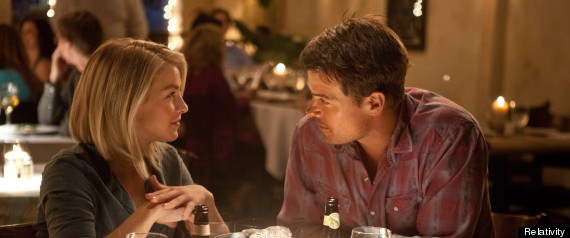
However, if you want your romance served straight-up, look no further then "Safe Haven." From the tear-jerker king, Nicholas Sparks, the love story stars Josh Duhamel and Julianne Hough, and promises its share of heart-clenching and eye-dabbing.

Before you make your selection at the cinema this weekend, take a look below at our review roundup on the new movies this weekend.

Obama speaks on importance of fatherhood


President Obama's speech in Chicago on Friday is worth revisiting because of the way he talked about fatherhood and his own upbringing as the son of a single mother.

In discussing the need to confront gun violence and build "ladders of opportunity" to the middle class for all Americans, the son of a single mother also discussed the need for strong families, and strong fathers.

"Don't get me wrong," Obama hastened to add. "As the son of a single mom, who gave everything she had to raise me with the help of my grandparents, I turned out okay."

There are "heroic" single mothers across the country, Obama added, "but at the same time, I wish I had had a father who was around and involved."

Earlier during his speech in Chicago's Hyde Park, Obama noted "there are entire neighborhoods where young people, they don't see an example of somebody succeeding.

"And for a lot of young boys and young men, in particular," he said, "they don't see an example of fathers or grandfathers, uncles, who are in a position to support families and be held up and respected."

Building strong communities and a strong economy "starts at home," Obama said, adding that "there's no more important ingredient for success -- nothing that would be more important for us reducing violence -- than strong, stable families, which means we should do more to promote marriage and encourage fatherhood."

The president also noted that "loving, supportive parents" can include foster parents, grandparents, extended families, and gay and straight parents.

"Those parents supporting kids," he said. "That's the single most important thing."


Dozens of pro-Dorner protesters rally at LAPD


LOS ANGELES (AP) — Dozens of protesters rallied outside Los Angeles police headquarters Saturday in support of Christopher Dorner, the former LAPD officer and suspected killer of four who died after a shootout and fire this week at a mountain cabin following one of the biggest manhunts in recent memory.

Protesters told the Los Angeles Times they didn't support Dorner's deadly methods, but objected to police corruption and brutality, and believed Dorner's claims of racism and unfair treatment by the department. Many said they were angered by the conduct of the manhunt that led to Dorner's death and injuries to innocent bystanders who were mistaken for him.

Michael Nam, 30, who held a sign with a flaming tombstone and the inscription "RIP Habeas Corpus," said it was "pretty obvious" police had no intention of bringing Dorner in alive.

"They were the judge, the jury and the executioner," Nam said. "As an American citizen, you have the right to a trial and due process by law."

During the hunt for Dorner, LAPD Chief Charlie Beck called for Dorner's surrender and said he didn't want to see the suspect or anyone else injured.

Dorner was already believed to have killed three people when he was cornered Tuesday at the cabin near Big Bear Lake, and during the standoff shot and killed a San Bernardino County sheriff's deputy, authorities said.

Only after calls for surrender and use of milder tear gas did deputies launch pyrotechnic gas canisters into the cabin, and the subsequent fire was not intentional, the Sheriff's Department said.

Dorner died of a self-inflicted gunshot wound at the end of the standoff, sheriff's officials said.

The 33-year-old has already inspired a burgeoning subculture of followers. While most don't condone killing, they see him as an outlaw hero who raged against powerful forces of authority, and some even question whether he really died.

Tributes include a ballad titled "El Matapolicias," or "The Police Killer," penned by a Mexican crooner with lyrics paying homage to Dorner, and a YouTube clip showing excerpts from a video game titled "Christopher Dorner's Last Stand Survival Game" whose opening frame declares him "A True American Hero."


Shiites lash out after Pakistan bombing kills 81


QUETTA, Pakistan (AP) — Angry residents on Sunday demanded government protection from an onslaught of attacks against Shiite Muslims, a day after 81 people were killed in a massive bombing that a local official said was a sign that security agencies were too scared to do their jobs.

Saturday's blast at a produce market in the city of Quetta also wounded 160 people and underlined the precarious situation for Shiites living in a majority Sunni country where many extremist groups don't consider them real Muslims.

Most of the dead and wounded were Hazaras, an ethnic group that migrated from Afghanistan over a century ago. Shiite Muslims, including Hazaras, have often been targeted by Sunni extremists in the province of Baluchistan where Quetta is the capital, the southern city of Karachi and northwestern Pakistan.

At the blast site, members of the Hazara community helped authorities dig through rubble to find the dead or survivors. Most of their efforts were focused on a two-story building that was completely destroyed. More than 20 shops nearby were also demolished.

Clothing and shoes were scattered through the concrete rubble, broken steel bars and shattered wooden window frames littering the streets.

One of those helping, 40-year-old Qurban Ali, was instructing young people to be patient and careful while removing the rubble, lest they hurt themselves or survivors still buried in the debris. His cousin Abbas was still missing after the blast.

Like many Hazaras, he lashed out at the people who perpetrated the violence.

"Who are these people who made us Hazara so grim and sad? Why are they after us?" he asked. "Not one month or week passes here without the killing of a member of the Hazara community … Why is the government — both central and provincial — so lethargic in protecting Shiites?"

Near the rubble, a group of more than 50 women were wailing and beating their heads in mourning.

On the road to the neighborhood where the attack occurred, Hazara youth burned tires and chanted for the arrests of the killers. A number of Shiite groups also staged a sit-in and were demanding the immediate removal of the chief secretary of Baluchistan and the top police official, said Rahim Jaffery, who heads a Shiite organization called the Council for the Protection of Mourning.

"We are demanding the city (protection) be handed over to the army so that the killing of Hazara Shiites can be stopped," he said.

Jaffery said a mass funeral for the victims had been planned for Sunday afternoon but all Shiite groups were meeting to decide whether to stage a protest similar to one in January when they refused to bury their dead for four days.

That protest led the prime minister to sack the chief minister of the province and his cabinet and put Governor Zulfiqar Magsi directly in charge of the region — a move that many Shiites thought would help protect their community. But the governor's comments revealed his frustration at a job growing ever more difficult.

Magsi said the blast was the result of a failure of the security and intelligence agencies in the province.

"Officials and personnel of these institutions are scared (of the terrorists). Therefore they don't take action against them," he said in comments that were broadcast on local television.

A militant group called Lashkar-e-Jhangvi called one local television station to claim responsibility for the attack.

Pakistan's intelligence agencies helped nurture Sunni militant groups like Lashkar-e-Jhangvi in the 1980s and 1990s to counter a perceived threat from neighboring Iran, which is mostly Shiite. Pakistan banned Lashkar-e-Jhangvi in 2001, but the group continues to operate fairly freely in their war against Shiites.

Last year was particularly deadly for Shiites in Pakistan. According to Human Rights Watch, more than 400 were killed in targeted attacks across the country. The human rights group said more than 125 were killed in Baluchistan province, most of whom belonged to the Hazara community.

Human rights groups have accused the government of not doing enough to protect Shiites.


Obama chief of staff warns of sequester


White House Chief of Staff Denis McDonough made his first tour of the Sunday shows today to warn about the impact of $85 billion in automatic budget cuts set to hit on March 1.

McDonough also said Obama wants to work with Republicans on an agreement to reduce the federal debt by $1.5 trillion over ten years, provided it includes new tax revenues as well as budget cuts.

"We're going to insist on doing this in a balanced way, a way that allows us to maintain the kinds of investments that middle-class families in this country rely on," McDonough said on ABC's This Week.

House Speaker John Boehner, R-Ohio, and other Republicans note that Obama got higher tax rates in the fiscal cliff deal of early January, and this debt reduction agreement should be spending cuts only.

In the meanwhile, the White House and Congress brace for the March 1 "sequester," $85 billion to be split between domestic and defense programs.

McDonough, who also appeared on NBC's Meet The Press and CBS' Face The Nation, said the automatic cuts would gut items ranging from education to mental health to food inspections, as well as critical national security programs.

"You've already heard the devastating list of horribles that the Pentagon has said are going to be out there," McDonough said.

In order to avoid all of that, McDonough said Obama is "ready to do another $1.5 trillion to get up to the $4 trillion target that economists across the country tell us is needed to stabilize the debt over the next 10 years."

The president will also insists on a "balanced" plan, McDonough said; i.e., new tax revenues to be derived by ending certain loopholes and deductions.

"Let's fix this in a kind of balanced way ... with a reasonable amount of spending cuts and a reasonable amount of revenue raisers so that we can get this thing done and move on to the business of the country," McDonough said.


White House immigration bill offers path to residency


The legislation is being developed as members in both chambers of Congress are drafting their own immigration bills.

WASHINGTON — A draft of a White House immigration proposal obtained by USA TODAY would allow illegal immigrants to become legal permanent residents within eight years.

The plan also would provide for more security funding and require business owners to check the immigration status of new hires within four years. In addition, the nation's 11 million illegal immigrants could apply for a newly created "Lawful Prospective Immigrant" visa, under the draft bill being written by the White House.

If approved, they could then apply for the same provisional legal status for their spouse or children living outside the country, according to the draft.

The bill is being developed as members in both chambers of Congress are drafting their own immigration bills. In the House, a bipartisan group of representatives has been negotiating an immigration proposal for years and are writing their own bill. Last month, four Republican senators joined with four Democratic senators to announce their agreement on the general outlines of an immigration plan.

One of those senators, Sen. Marco Rubio, R-Fla., said Obama's bill repeats the failures of past legislation and would be "dead on arrival" in Congress.

"It fails to follow through on previously broken promises to secure our borders, (and) creates a special pathway that puts those who broke our immigration laws at an advantage over those who chose to do things the right way and come here legally," Rubio said. "It would actually make our immigration problems worse."

The draft was obtained from an Obama administration official who said it was being distributed to various agencies. The official requested anonymity because he was not authorized to release the proposal publicly.

The bill mirrors many provisions of the bipartisan 2007 bill that was spearheaded by the late Sen. Ted Kennedy, D-Mass., and Sen. John McCain, R-Ariz., and ultimately failed.

In his first term, Obama often deferred to Congress on drafting and advancing major legislation, including the Affordable Care Act. He has openly supported the efforts in Congress to take the lead on immigration legislation, and just this week met with Democratic senators to discuss their proposals.

But two weeks ago in Las Vegas, while outlining his immigration plans, Obama made clear that he would not wait too long for Congress to get moving.

"If Congress is unable to move forward in a timely fashion, I will send up a bill based on my proposal and insist that they vote on it right away," he said.

White House spokesman Clark Stevens said Saturday that the administration continues to support the bipartisan efforts ongoing in Congress.

With Ellis Island in the background, a group of immigrant rights advocates gathered on Wednesday in Liberty State Park in Jersey City.

"The president has made clear the principles upon which he believes any common-sense immigration reform effort should be based," Stevens said. "We continue to work in support of a bipartisan effort, and while the president has made clear he will move forward if Congress fails to act, progress continues to be made and the administration has not prepared a final bill to submit."

According to the White House draft, people would need to pass a criminal background check, submit biometric information and pay fees to qualify for the new visa. If approved, they would be allowed to legally reside in the U.S. for four years, work and leave the country for short periods of time. After the four years, they could then reapply for an extension.

Illegal immigrants would be disqualified from the program if they were convicted of a crime that led to a prison term of at least one year, three or more different crimes that resulted in a total of 90 days in jail, or if they committed any offense abroad that "if committed in the United States would render the alien inadmissible or removable from the United States."

People currently in federal custody or facing deportation proceedings also could be allowed to apply for the Lawful Prospective Immigrant visa. Application forms and instructions would be provided in "the most common languages spoken by persons in the United States," but the application and all supporting evidence submitted to the federal government would have to be in English.

They would also be given a new identification card to show as proof of their legal status in the country.

The immigrants could then apply for legal permanent residence, commonly known as a green card, within eight years if they learn English and "the history and government of the United States" and pay back taxes. That would then clear the path for them to apply for U.S. citizenship.

To combat fraud, the draft proposes a new Social Security card be developed that is "fraud-resistant, tamper-resistant and wear-resistant." The Social Security Administration would be required to issue the new cards within two years.

A major requirement for many Republicans is enhanced border security. The bill calls for an unspecified increase in the Border Patrol, allows the Department of Homeland Security to expand technological improvements along the border and adds 140 new immigration judges to process the heavy flow of people who violate immigration laws.

It also orders U.S. Customs and Border Protection (CBP) to study whether a land-border crossing fee should be implemented to help offset border security costs. The draft also proposes raising many inspection fees that border-crossers already pay.

The draft bill proposes a new plan to allow Homeland Security to "accept donations" from citizens, businesses and local and state governments to improve ports of entry and security features along the border. And it would require CBP to begin collecting statistics on deaths along the border and report them quarterly.

The draft also expands the E-Verify program that checks the immigration status of people seeking new jobs. Businesses with more than 1,000 employees must begin using the system within two years, businesses with more than 250 employees within three years and all businesses within four years.

Homeland Security, working with the U.S. departments of Labor and Agriculture, the attorney general and other agencies, would engage in a $40 million-a-year program to educate business owners and workers about the program.

Homeland Security also would be required to submit a report within 18 months showing how the worker verification system is working, and specifically explain how it is affecting the nation's agriculture industry, which relies heavily on illegal immigrant workers.

The draft obtained by USA TODAY does not include sections that would alter the nation's legal immigration system to adjust the future flow of legal immigrants, which is expected to be a critical component of any immigration overhaul.